
Aluminum alloys, with their lightweight, high strength, and ease of processing, have become a core material for the automotive industry's upgrade. Among the many aluminum alloy grades, 5754 and 6101 are considered a "golden pair," playing key roles in vehicle body structure and electrical systems, respectively.
5754 Aluminum Alloy
AMS 5754 material belongs to the Al-Mg series of non-heat-treatable aluminum alloys. The addition of magnesium gives it two core advantages: excellent corrosion resistance and balanced mechanical properties. This alloy has a density only one-third that of steel, yet it meets the basic strength requirements of vehicle body structures, making it an ideal choice for automotive lightweighting.
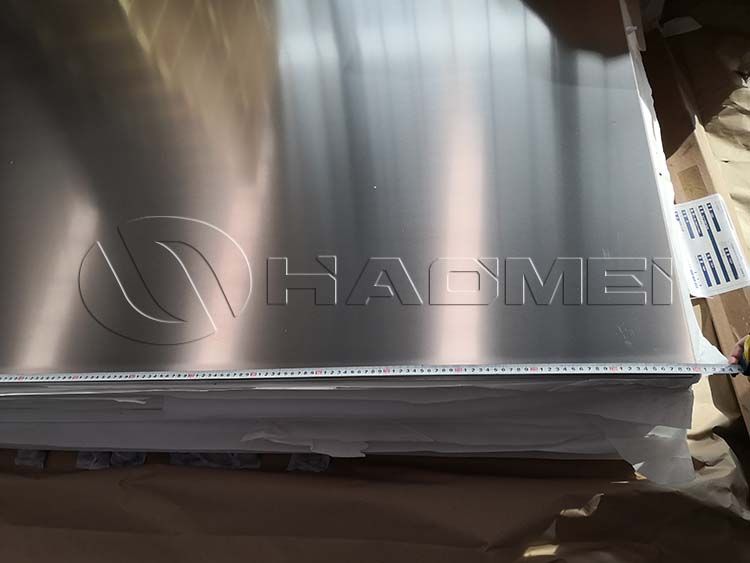
In the automotive body field, 5754 aluminum is ubiquitous. 1.5-3mm thick 5754 h32 sheets are commonly used to manufacture car door panels and engine hood inner panels, achieving a 60% weight reduction compared to traditional steel.
For commercial vehicles, it's a darling of the manufacturing process—the side walls, roofs, and floors of trucks, and the skin and frame of buses all rely on its excellent stamping formability and weather resistance. Even when exposed to corrosive environments such as rain and de-icing agents for extended periods, it can maintain its rust-free performance for over 10 years.
In key components of new energy vehicles, 5754 also shines. The battery tray of a certain electric SUV is made of 5754-H321 aluminum alloy, achieving a 25% weight reduction and achieving an IP67 waterproof rating thanks to its excellent sealing performance. Furthermore, it effectively disperses impact forces during crash tests, ensuring battery safety.
In addition, components such as oil lines, brake lines, and engine mounts in automotive chassis often use 5754 tubing in the H111 state. Its resistance to brake fluid corrosion extends its service life to 8 years, 3 years longer than ordinary aluminum tubing.
It's worth noting that 5754 aluminum alloy has exceptional weldability. Stable welds can be achieved using conventional welding processes like MIG and TIG, significantly improving production efficiency and structural reliability in automotive body manufacturing, which requires extensive assembly. Coupled with a 95% recycling rate, it perfectly aligns with the automotive industry's sustainable development needs.
6101 Aluminum Alloy
Unlike 5754, 6101 alloy is an Al-Mg-Si heat-treatable aluminum alloy. After T6 heat treatment (solution treatment + artificial aging), its mechanical properties undergo a qualitative leap, while maintaining excellent extrusion formability, making it suitable for both automotive structural components and electrical systems.
In the structural component field, 6101's excellent extrusion characteristics make it particularly suitable for producing profiles with complex cross-sections, such as automotive crash beams and sill beams. After T6 treatment, its yield strength can exceed 270 MPa, and its elongation remains around 12%, easily handling dynamic loads during vehicle operation and effectively absorbing energy during collisions to protect occupants. Compared to the commonly used 6063 alloy, 6101 offers superior strength and fatigue resistance, making it frequently used in key support components of vehicle body frames.
However, 6101's most distinctive application is as a bus conductor in the electrical systems of new energy vehicles. As the "power backbone" connecting the battery pack, inverter, and motor, the bus conductor demands extremely high conductivity, strength, and heat resistance.
The 6101 t61 aluminum bus bar perfectly meets these requirements: its conductivity reaches over 60% of pure aluminum, enabling efficient transmission of large currents; its high strength in the T6 state solves the problem of deformation inherent in pure aluminum bus conductors, offering approximately 30% higher strength compared to 1350 pure aluminum bus conductors; simultaneously, it possesses excellent heat resistance and stability, maintaining stable conductivity and structural integrity during prolonged high-load operation in new energy vehicles.
Inside the battery packs of new energy vehicles, the 6101-T6 busbar is typically processed into flat strips or irregularly shaped profiles, and a reliable connection is achieved through friction stir welding.
This ensures smooth current transmission and adapts to the compact layout design of the battery pack. This application not only improves the reliability of the electrical system but also further contributes to the lightweight of the entire vehicle through integrated design.